
Visiting a fish store is like opening a box of chocolate: You never know what you’re going to find. This is the case of Finspiration Aquatics in Sharonville, near Cincinnati, OH. The owner, Chris Benes, runs a specialty aquatics store with loads of unusual fish species and all the equipment you need to house them properly.
Chris brings in new fish almost weekly, so visiting Finspiration is a treasure hunt each time. Given that he quarantines every fish for three weeks before moving them to his numerous sales tanks, you can be confident you’re getting high-quality, healthy animals that are eating well.
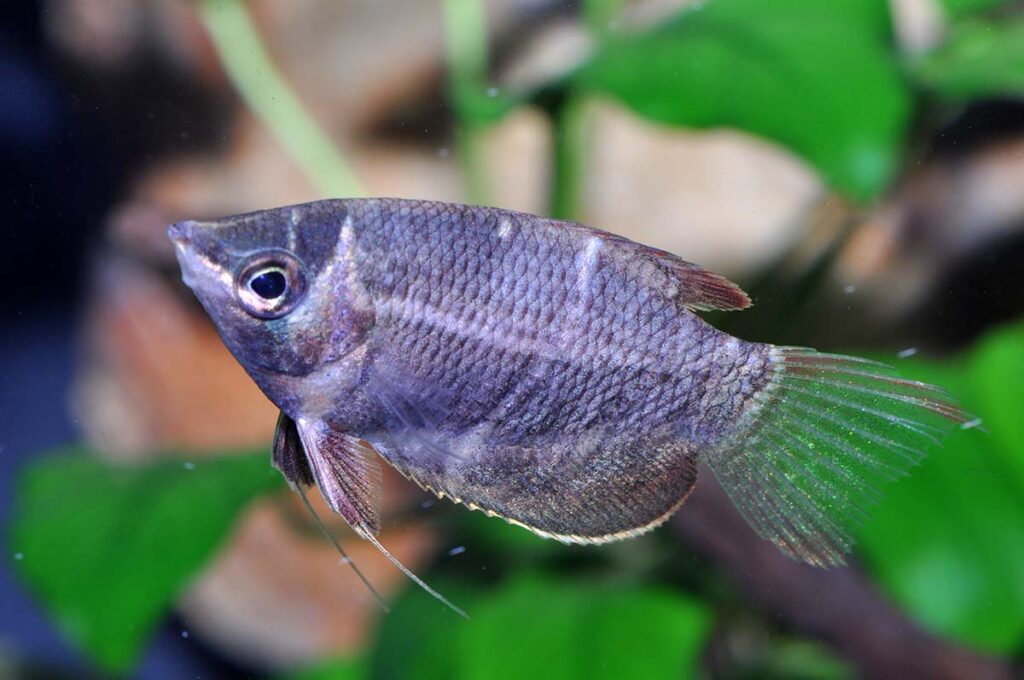
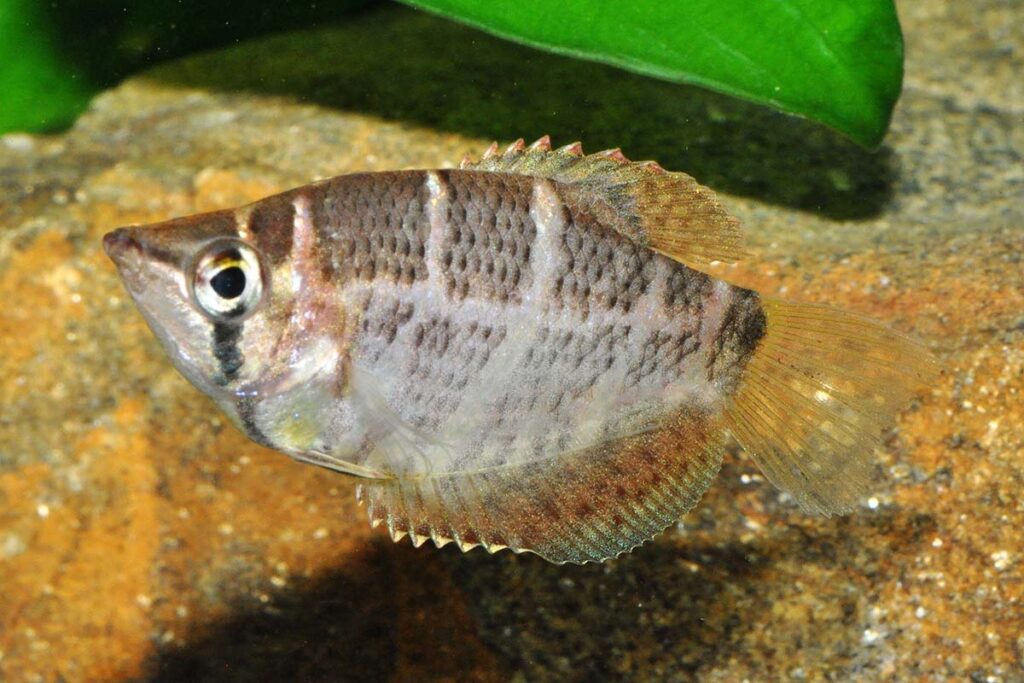
Talking of chocolates, Chris currently has all four species of chocolate gourami in stock: Sphaerichthys osphromenoides, the namesake Chocolate Gourami; Sphaerichthys selatanensis, the Crossband Chocolate Gourami; Sphaerichthys acrostoma, the Giant Chocolate Gourami; and finally Sphaerichthys vaillanti, Valliant’s or Samurai Chocolate Gourami. All four species stay relatively small, around 2-2.5 inches (5-6 cm).
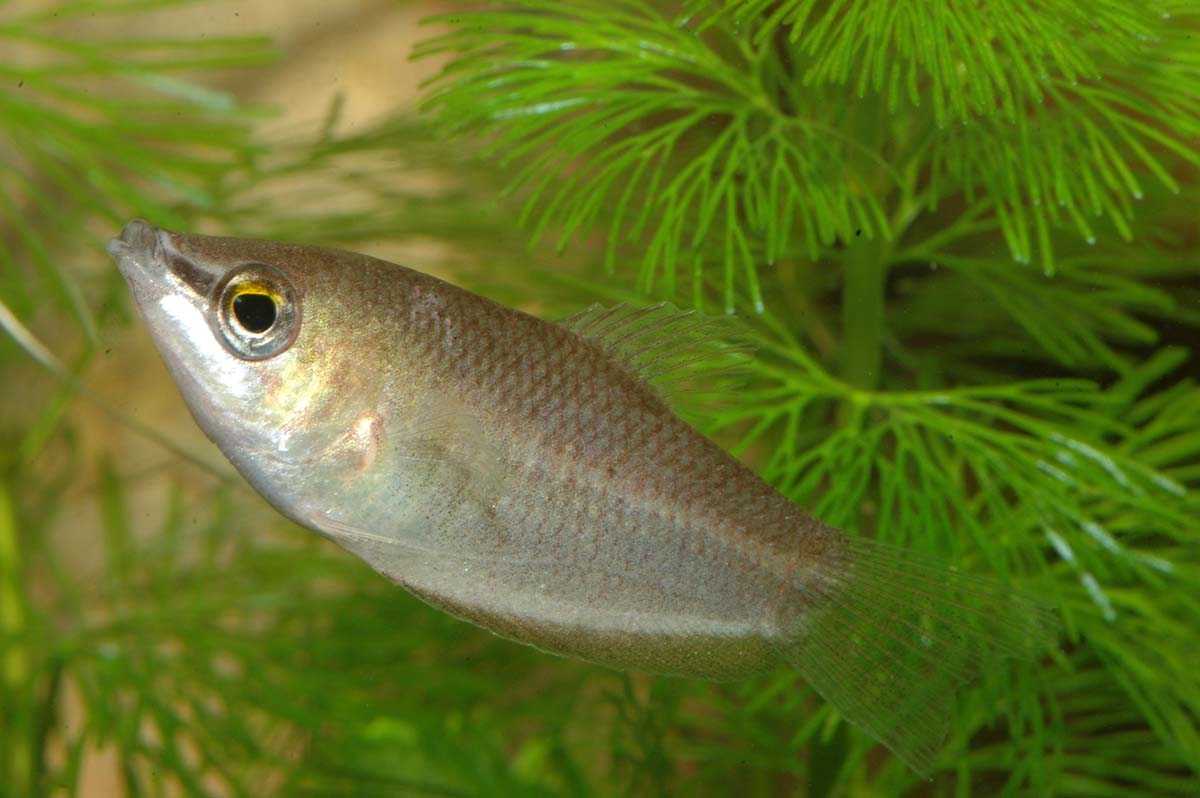
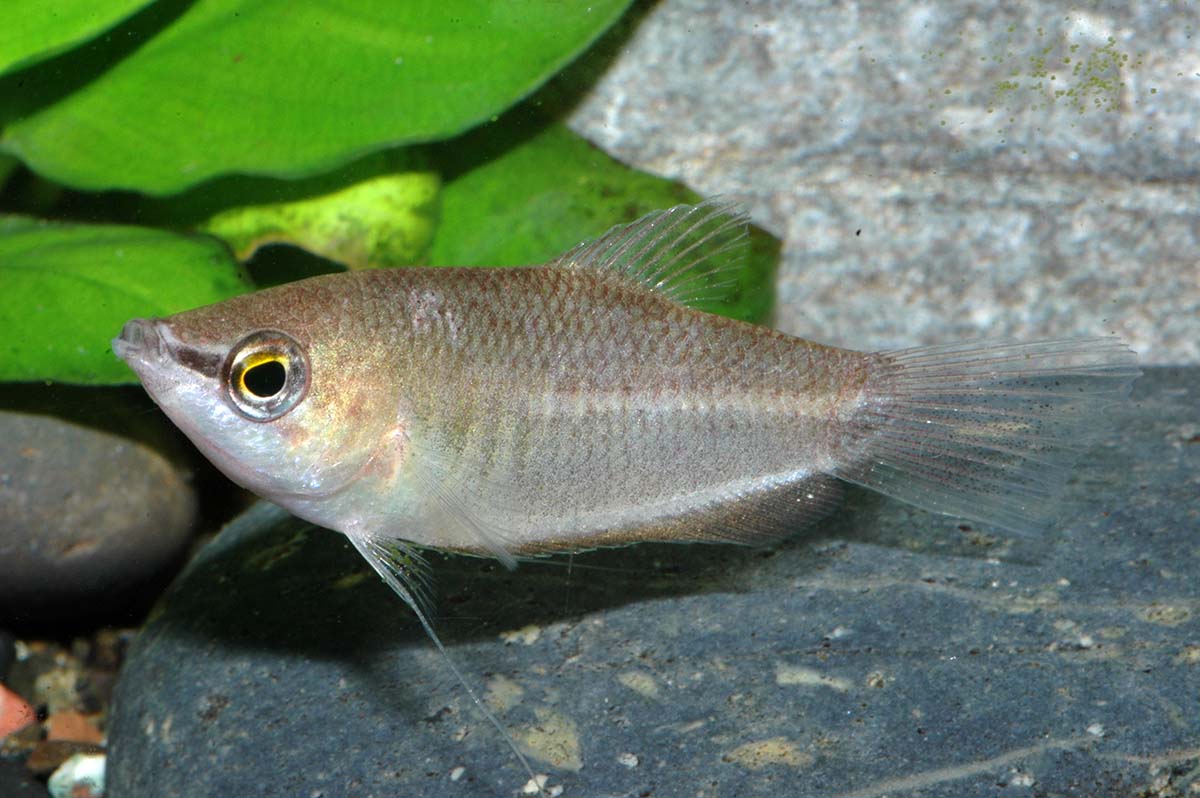
Chocolate gouramis are not beginner fish, as they prefer softer water with a slightly acidic pH of around 6. Their home habitats are peat swamps. For successful breeding, the pH should be even lower, around 5. As a micropredator, they prefer small crustaceans (daphnia), worms (Grindal or White Worms), insect larvae, and other zooplankton, but they also will eat dry foods after some acclimation.
The cool thing about chocolate gouramis is that they are mouthbrooders that likely evolved from bubble nest builders, as there are observations of rudimentary bubble-spitting during courtship of the chocolate gouramis. Curiously, Sphaerichthys osphromenoides and S. selatanensis are maternal mouthbrooders, while S. acrostoma and S. vaillanti are paternal mouthbrooders.
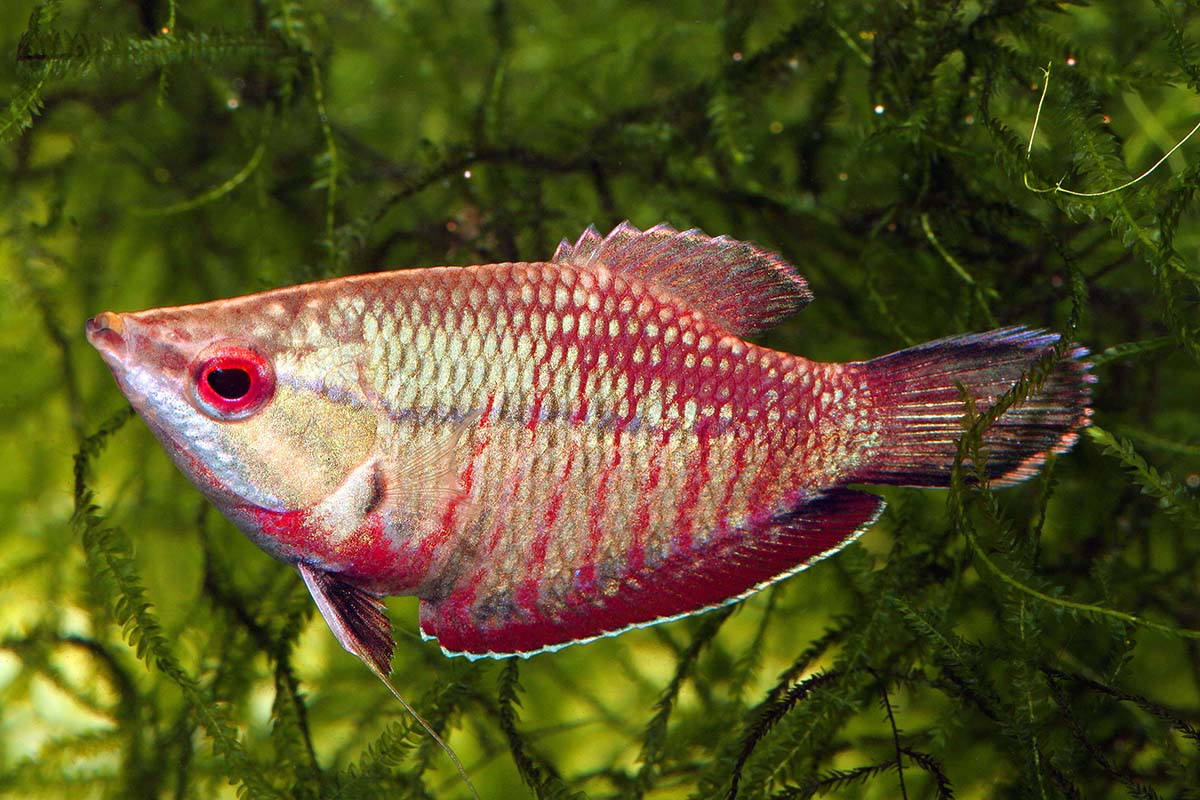
All four species are really worthwhile keeping, and the challenge of breeding them successfully makes them a fun project for fishkeepers who favor the unusual.





Hello,
Just a small clarification regarding Sphaerichthys osphromenoides: this species is indeed a paternal mouthbrooder. After spawning, it is the male that takes up the eggs and incubates them in his mouth.
The confusion between the sexes probably comes from the fairly pronounced sexual dimorphism in this species. The female generally displays more pronounced iridescent reflections and stronger coloration, which can range from orange to blue depending on the population, while her caudal fin has a more distinctly V-shaped profile. The male, on the other hand, has a more uniform coloration, with less pronounced iridescence, and a caudal fin with a more rounded, U-shaped profile.
From a behavioural standpoint, the male generally remains within his territory, which he tends to establish in a dark and sheltered area. The female, meanwhile, fiercely defends the perimeter of this territory and will readily drive away, or even attack, any fish that approaches it.
I also filmed the reproduction of my own pair of Sphaerichthys osphromenoides. The video shows the spawning process as well as the male’s mouthbrooding behaviour. I would be happy to send it to you if you are interested.
Kind regards